
AI Meets DeFi: Autonomous Trading Agents Now Manage 30% of All Decentralized Exchange Volume
The financial landscape of 2026 has reached a definitive tipping point. The "Wild West" of Decentralized Finance (DeFi), once characterized by manual yield farming and emotional retail trading, has been replaced by a silent, high-speed architecture of silicon and code. As of February 2026, Autonomous Trading Agents (ATAs)—AI-driven entities capable of independent decision-making—now manage a staggering 30% of all trading volume across Decentralized Exchanges (DEXs).
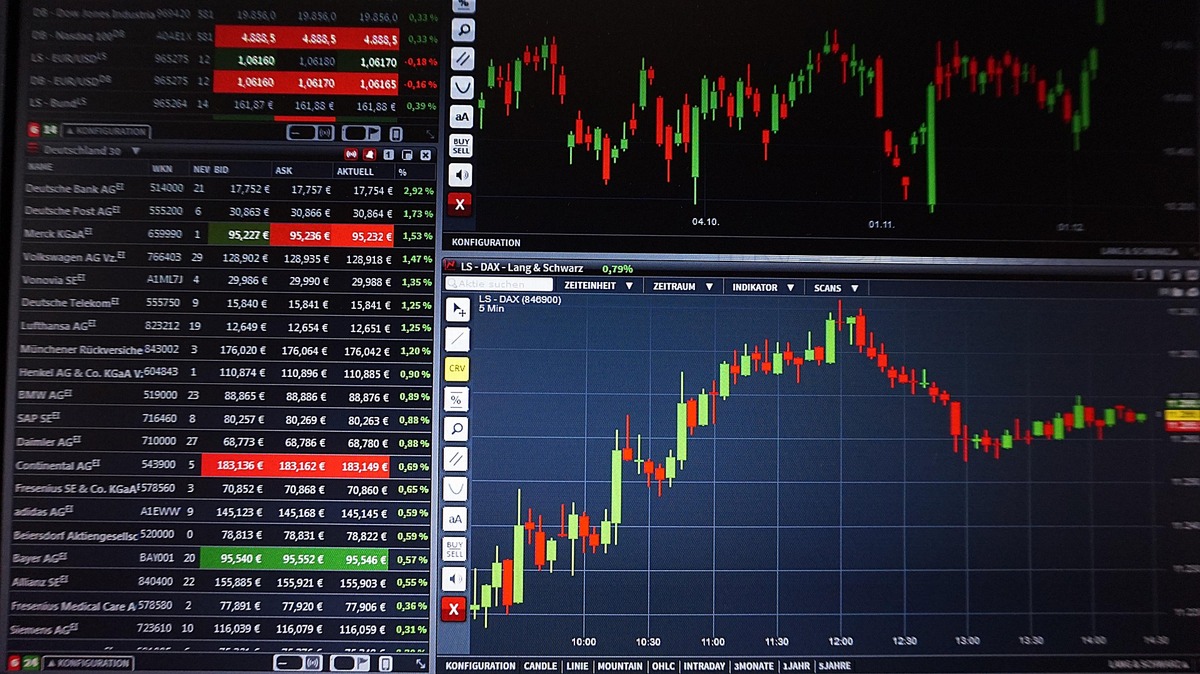
This convergence of Artificial Intelligence and blockchain technology is not just a trend; it is a total reimagining of how capital moves. For the digital nomads, tech-investors, and global citizens at IntoTravels, this shift represents a move toward a more efficient, liquid, and paradoxically "human-free" financial world.
What is an Autonomous Trading Agent (ATA)?
In 2026, an ATA is far more than a simple "trading bot." While 2021-era bots followed static "if-then" parameters, today’s ATAs are powered by Large Action Models (LAMs) and On-Chain Reinforcement Learning.
Key Characteristics of 2026 ATAs:
Self-Custody & Agency: ATAs operate with their own decentralized wallets. They have the "agency" to move funds across different protocols without human approval, guided only by a set of high-level goals provided by the owner (e.g., "Maximize yield with a 5% risk tolerance").
Predictive Sentiment Analysis: These agents ingest real-time data from social media, news feeds, and governance forums, predicting market-moving events before they manifest as price action.
MEV Optimization: ATAs are the primary defenders against "Maximal Extractable Value" (MEV) bots. They can "camouflage" their trades or bundle them to ensure the user gets the best possible price on a DEX like Uniswap or Raydium.
The Rise of the "Invisible Trader"
The jump to 30% of total DEX volume in 2026 was fueled by the "Institutionalization of AI." Large hedge funds and individual "Whales" have realized that human emotion is the greatest liability in the 24/7/365 crypto market.
1. Eliminating the "Fatigue Gap"
Traditional markets close; crypto markets do not. Between 2:00 AM and 5:00 AM UTC, retail liquidity often thins out. In 2026, ATAs fill this "Fatigue Gap," ensuring that DEXs remain liquid and stable even when the human world is asleep. This has reduced the average "Slippage" on major DEXs by nearly 40% since 2024.
2. The Yield-Arbitrage Revolution
DeFi is a fragmented ecosystem. Yields in a lending pool on Ethereum might be 5%, while a similar pool on an L2 (Layer 2) like Base or Arbitrum offers 7%. ATAs bridge this gap instantly. They monitor thousands of pools simultaneously, moving capital across bridges to capture "Micro-Yields" that would be impossible for a human to track.
3. "Intent-Based" Swapping
The latest ATAs utilize Intent-Centric Design. A user simply tells the agent: "I want to swap 10 ETH for SOL, but wait for the lowest possible gas fees over the next 6 hours." The AI then monitors the mempool (the waiting room for transactions) and executes the trade at the millisecond gas prices bottom out.
Impact on the Travel and Global Nomad Lifestyle
For the community at IntoTravels, the AI-DeFi merger is a tool for lifestyle liberation. The "Digital Nomad" of 2026 is no longer tethered to a screen, watching candles flicker on a chart.
Passive Financial Sovereignty: Travelers can now deploy an ATA to manage their "Travel Fund." While the traveler is hiking in the Himalayas or exploring the streets of Tokyo, their AI agent is actively rebalancing their portfolio, harvesting yields, and protecting their capital from sudden market crashes.
The "Zero-Stress" Off-Ramp: ATAs are integrated with 2026 travel apps. When a traveler enters a new country, the AI agent can automatically convert a portion of their DeFi yields into local-currency-backed stablecoins, ensuring the traveler always has "Spending Power" without manual intervention.
Automated Risk Management: If an ATA detects a potential "De-pegging" of a stablecoin or a smart contract exploit in a protocol where the traveler has funds, it can move that capital to safety in seconds—a critical feature for someone who may be offline for several hours during a long-haul flight.
The Technology: The 2026 AI-DeFi Stack
The surge to 30% volume is supported by a specialized technological infrastructure:
| Component | Role in the AI-DeFi Convergence |
|---|---|
| zk-ML (Zero-Knowledge Machine Learning) | Allows AI agents to prove they executed a trade based on a specific model without revealing the underlying strategy. |
| Cross-Chain Abstraction | Tools that allow ATAs to see the entire crypto market as one single pool of liquidity, regardless of the underlying blockchain. |
| Smart Contract Wallets (Account Abstraction) | Enables "Programmable Permissions," allowing the AI to trade but preventing it from withdrawing funds to an external address. |
| Neural Oracles | AI-driven data feeds that provide a "Truth Score" for market data, filtering out "Wash Trading" and "Fake Volume." |
The 2026 Market Dynamics: AI vs. Human
| Feature | Human-Driven Trading (2021) | AI-Driven Trading (2026) |
|---|---|---|
| Decision Speed | Seconds / Minutes. | Milliseconds. |
| Emotional Bias | High (Fear of Missing Out / Panic). | Zero (Mathematical Objective). |
| Data Intake | Limited (One screen / few charts). | Global (Full-spectrum data ingestion). |
| Operation | Part-time / Manual. | 24/7 / Autonomous. |
| DEX Volume Share | ~95%. | ~30% and growing. |
Challenges: The "Black Box" Risk and AI-on-AI Combat
The dominance of AI in DeFi brings a new set of risks to the global economy:
1. Flash Crashes and "Algorithmic Cascades"
When 30% of the market is managed by AI, a single "Error" in a widely used trading model can trigger a cascade. If one AI agent starts selling, others may perceive this as a market signal and follow suit, leading to a "Flash Crash" that happens too fast for human intervention.
2. The "Dark Forest" of AI-on-AI Combat
DEXs have become a digital battlefield. Advanced ATAs are now engaged in "Adversarial Trading"—where one AI tries to trick another into buying a "dummy" asset or executing a bad trade. This creates a "Predatory Environment" that can be dangerous for retail users who aren't using their own AI "Protector" agents.
3. The Centralization of Intelligence
While the trading is decentralized, the AI models are often developed by a few powerful firms. This creates a new type of centralization where "Model Superiority" dictates who wins in the DeFi markets, potentially creating a "Data Elite."
Conclusion: Mastering the Machine Age
The "AI Meets DeFi" revolution is the final stage of the digitalization of money. In 2026, the markets have become too fast, too complex, and too global for the human brain to manage alone.
For the explorers at IntoTravels, the rise of Autonomous Trading Agents is a call to evolve. We are moving toward a world where our financial health is maintained by "Digital Sentinels" that work for us while we live our lives. The 30% of volume managed by AI is not a sign of human obsolescence, but a sign of human Leisure. By delegating the "Mathematics of Money" to AI, we are freeing ourselves to focus on the "Experience of Life."


