
Gamified DeFi: Why 2026's Top Learning Apps Use Metaverse Simulations to Teach Risk Management.
Gamified DeFi: Why 2026's Top Learning Apps Use Metaverse Simulations to Teach Risk Management
In the fast-evolving financial landscape of 2026, the barrier to entry for Decentralized Finance (DeFi) is no longer a lack of capital or complex code—it is the mastery of risk. As DeFi protocols grow more interconnected and volatile, traditional education methods like static whitepapers and linear video courses have proven insufficient.
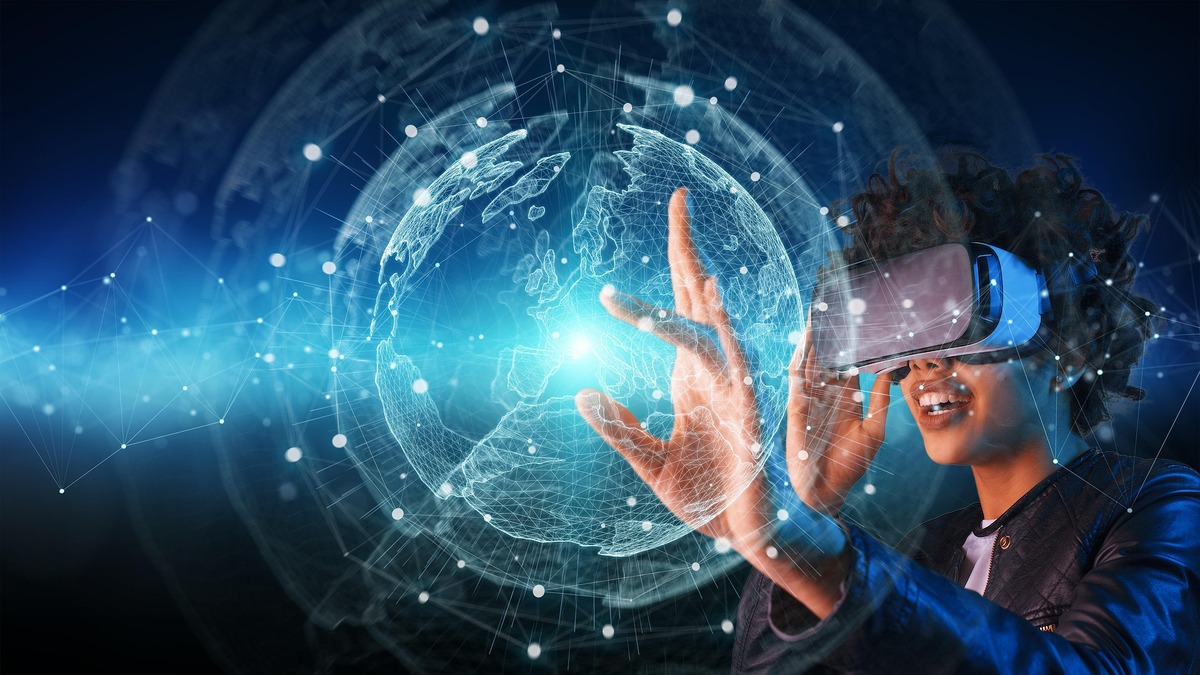
The industry has reached a turning point: Gamified DeFi. By leveraging Metaverse simulations, 2026's leading learning apps are transforming how millions of users understand liquidity cascades, smart contract vulnerabilities, and market volatility. This shift from "reading" to "experiencing" is not just about fun; it is a critical evolution in financial literacy designed to prevent catastrophic losses in the digital age.
The Simulation Revolution: Why 2026 is Different
For the digital nomads and explorers at IntoTravels, staying financially solvent while crossing borders is paramount. In 2026, we have moved past the era of "testnets" that felt like clunky spreadsheets. Today's learning environments are high-fidelity, immersive worlds.
1. Risk-Free Experimentation
The greatest advantage of Metaverse-based learning is the ability to fail safely. In a simulation, a user can experience the total "liquidation" of a $50,000 leveraged position due to a sudden stablecoin de-pegging event. The emotional sting is real, but the financial loss is zero. This "visceral learning" creates a psychological anchor that traditional education cannot replicate.
2. Immersive Complexity
DeFi in 2026 is a multi-layered stack involving cross-chain bridges, liquid staking derivatives, and AI-managed yield aggregators. Metaverse simulations allow learners to visualize these "invisible" layers. You don't just see a number on a screen; you walk through a "Virtual Vault" and see how your assets are being collateralized and lent out in real-time.
The Core Curriculum: Mastering the 2026 Risk Matrix
Top learning apps in 2026 have moved beyond "What is Bitcoin?" to focus on the advanced risk management strategies required for the modern DeFi ecosystem.
I. Contagion and Systemic Risk Modeling
In 2026, the biggest threat to a portfolio is often a "Cascading Failure." Simulations now include Contagion Engines that model what happens when a single protocol exploit triggers a liquidation spiral across the entire ecosystem.
The Lesson: Learners must identify "Single Points of Failure" in their virtual portfolios and diversify across unrelated protocol architectures.
II. Smart Contract "War Games"
Leading apps like Alchemy University and Buildspace 2.0 use Metaverse sandboxes to host "War Games."
The Task: A user is given a virtual protocol with a hidden vulnerability (e.g., a reentrancy bug).
The Goal: They must "defend" their capital against AI-driven "Hackers" by upgrading their contracts or moving funds before the exploit is triggered. This teaches users the importance of security audits and protocol governance.
III. Volatility Stress Testing
Using real-world historical data (such as the market fluctuations of 2024 and 2025), simulations subject a user's virtual portfolio to Extreme Volatility Scenarios.
The Outcome: The simulation calculates a "Risk Score." Users learn to use sophisticated 2026 tools like Self-Adjusting Stop-Losses and Delta-Neutral Hedging to keep their "Health Factor" stable during a simulated 30% market crash.
Top 2026 Apps Redefining DeFi Education
The market for gamified learning has consolidated into a few high-performance platforms that blend AI, VR, and blockchain data.
| App | Platform | Specialty |
|---|---|---|
| Meta-MILE | Meta / VR | Multi-layered "Classroom" simulations for institutional-grade DeFi. |
| BitDegree 3.0 | Web3 / Browser | Skill-based rewards and 3D "Dungeons" of code auditing. |
| Disco AI | Mobile / AR | AI-tutors that guide you through real-world risk scenarios in the Metaverse. |
| The Sandbox Finance | Metaverse | A dedicated "Financial District" where users build and stress-test their own banks. |
The Psychology of the "Gamified Mind"
Why does gamification work better than a university lecture? In 2026, educational psychologists point to "Behavioral Transfer." When a learner completes a quest in a Metaverse simulation—for example, "Successfully hedge your portfolio against a 50% Ethereum drop"—the brain treats that victory as a real-world capability. This builds Self-Efficacy. Instead of feeling intimidated by the complexity of DeFi, the user feels like an "Active Player" who understands the levers of the system.
Impact on the Travel and Digital Nomad Lifestyle
For the global citizens at IntoTravels, gamified DeFi education is the ultimate "Travel Insurance."
Financial Resilience on the Move: A traveler who has spent 20 hours in a risk management simulation is 90% less likely to lose their travel funds to a "Yield Farm" scam or an over-leveraged trade.
Portable Skills: The "Proof of Knowledge" (often issued as a Soulbound Token) earned from these apps is recognized by 2026 crypto-native banks. Completing a "Metaverse Risk Masterclass" can lead to lower collateral requirements for crypto-backed travel loans.
Just-In-Time Learning: Imagine you are in a country with high inflation. You can spend 15 minutes in a "Hyper-Inflation Simulation" app to learn which local DeFi stablecoin strategies are currently the safest, protecting your purchasing power instantly.
Challenges: The "Game vs. Reality" Gap
Despite the surge, 2026 educators warn of the "Overconfidence Bias." 1. Infinite Retries: In a game, you can always hit "Restart." In the real DeFi world, there is no "Undo" button for a lost seed phrase or a sent-to-wrong-address transaction.
2. Model Limitations: No simulation can perfectly model the "Black Swan" events of 2026. Learners must be taught that while a simulation prepares you for the expected, the market will always produce the unexpected.
Conclusion: Playing for Keeps
The rise of gamified DeFi in 2026 is a signal that financial education has finally caught up with the speed of financial technology. We have realized that in a world of decentralized, 24/7 markets, we cannot rely on "static" knowledge. We need "Active Instincts."
For the explorers at IntoTravels, these Metaverse simulations are your training ground. By "playing" with risk in the virtual world, you are building the "Financial Armor" needed to wander the physical world with total confidence. The future of finance is a game, but the rewards—freedom, mobility, and security—are as real as they get.


